Early Signs of Optimism Amid Financial Turbulence: A Look at Expected Credit Losses in European Banks
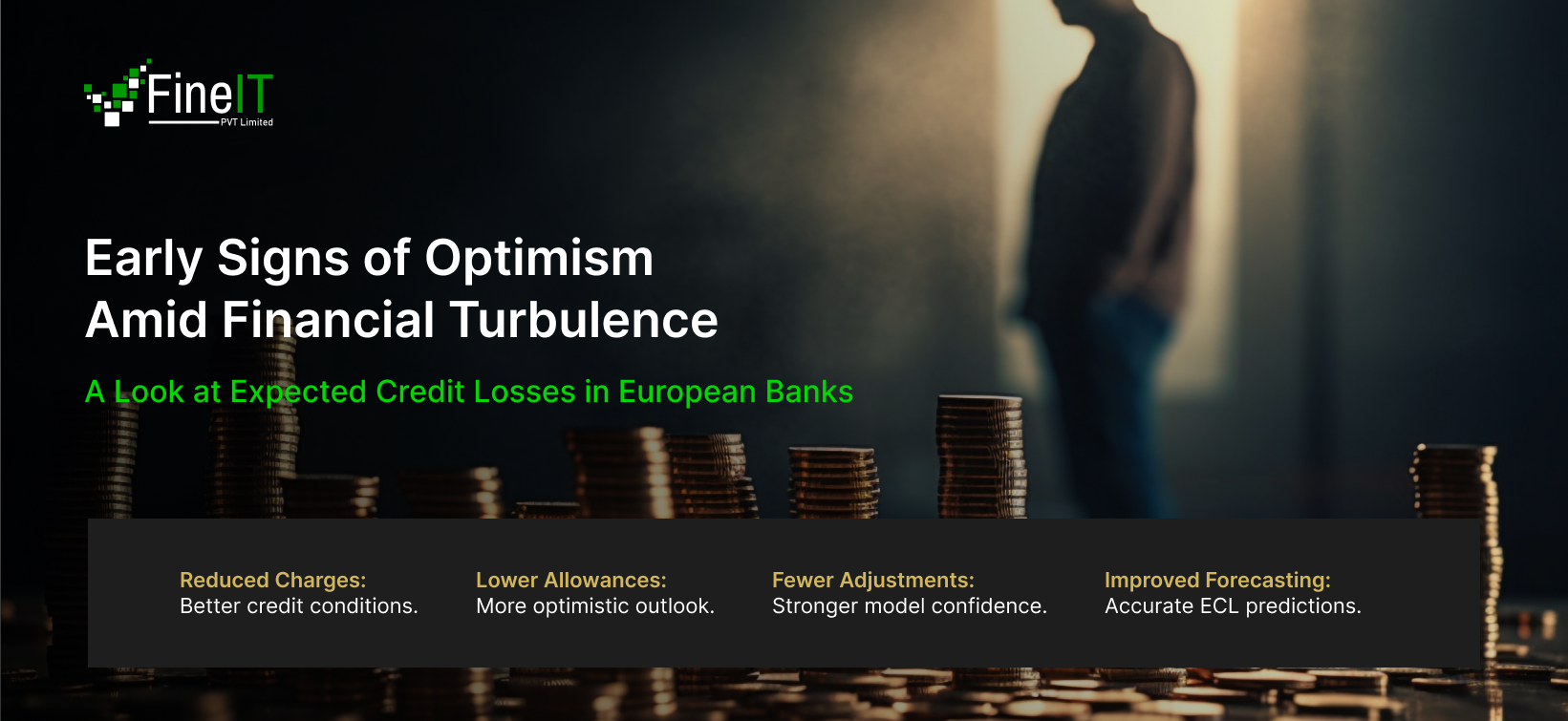
In the face of a global economic slowdown, ongoing geopolitical tensions, and the rapid rise of new technologies, European banks have shown resilience and adaptability. The 2023 year-end results of the 26 largest banks across 12 European countries reveal insights into how these institutions manage uncertainties and the impact on their Expected Credit Losses (ECL).
What are the What are the key findings on expected credit losses??
The 2023 financial reporting of these banks shows several notable trends in ECL and their management of financial risks:
1. What is the What is the impact of ECL charges on profit or loss??:
– The study observed a reduction in the ECL charges impacting the profit or loss statements of these banks. This decrease signifies an improved credit environment or enhanced credit risk management practices among these institutions.
2. What are the What are the changes in ECL allowances??:
– There was a noted shift in ECL allowances, with changes in coverage ratios and allocations between different stages. Specifically, the coverage ratios showed a reduction, reflecting a more optimistic outlook on credit risk and the quality of the loan portfolios.
3. What are What post-model adjustments and overlays are being applied??:
– The use of post-model adjustments or overlays decreased, suggesting that banks have increased confidence in their primary ECL models. These adjustments represented a smaller portion of the overall ECL allowances, indicating better alignment between modeled expectations and actual credit conditions.
4. What is How is forward-looking information being utilized??:
– Banks increasingly incorporated forward-looking information into their ECL calculations, utilizing a variety of macroeconomic indicators and scenarios to predict future credit losses more accurately. This practice enhances the predictive power of ECL models and aids in better risk management.
5. How is How are ECL allowances allocated across stages? determined?:
– There was a detailed analysis of the allocation of ECL allowances across different stages. The movement between stages, especially from stage 2 (loans with increased credit risk) to stage 3 (credit-impaired loans), provided insights into the evolving risk profiles of the loan portfolios.
How can uncertainties and forward-looking information be managed?
Despite the overall reduction in ECL charges and allowances, the persistent uncertainties in the global economic and geopolitical landscape require careful navigation. Banks have employed several strategies:
How can macroeconomic variables be enhanced and integrated?
Banks are now better at integrating macroeconomic variables and forecasts into their ECL models, allowing for more nuanced and accurate predictions of future credit risks.
What are What dynamic adjustments and overlays are most effective??
The refinement of ECL models and reduced reliance on post-model adjustments reflect a more precise approach to credit risk management, with real-time data adjustments based on the latest economic conditions.
How can exposures be diversified and managed?
The varied impact of ECL changes among banks underscores the importance of maintaining diversified portfolios across different regions and sectors to balance and mitigate risks effectively.
What are the What are the key takeaways and conclusions?s?
The reduction in ECL charges and allowances across European banks hints at early signs of optimism in the sector. The data indicates that banks are better prepared to handle credit risks, supported by more sophisticated and dynamic ECL models. While uncertainties persist, the financial health of European banks appears robust, providing a stable foundation for navigating future economic challenges. The trends observed in 2023 suggest a cautiously positive outlook for the banking sector in 2024 and beyond.
This analysis leverages the insights from the 2023 year-end reports, underscoring the resilience and adaptability of European banks amid a challenging global environment.
What is Estimator9: The Automated IFRS9 Solution for ECL Calculation?
To support banks in their ECL calculations and compliance with IFRS9, we offer Estimator9, a fully automated solution designed to streamline and enhance the accuracy of ECL calculations. Estimator9 integrates forward-looking information, applies dynamic adjustments, and leverages advanced modeling techniques to provide reliable and timely ECL estimates. With Estimator9, banks can:
- Automate the complex process of ECL calculation.
- Ensure compliance with IFRS9 standards.
- Improve risk management with precise and predictive ECL models.
- Reduce reliance on post-model adjustments and overlays.
By adopting Estimator9, banks can achieve greater efficiency and accuracy in their financial reporting, positioning themselves for stability and growth in an ever-evolving economic landscape.
For further details, please contact info@fineit.io or sales@fineit.io.
Frequently Asked Questions
About FineIT Private Limited
FineIT Private Limited is a leading Fintech provider.
Published by
Muzammal Rahim
FineIT Private Limited — IFRS and Basel compliance software, incorporated in Islamabad, Pakistan, in April 2022,