Pakistan’s IFRS 9 Implementation: A Case of Extended Deadlines?
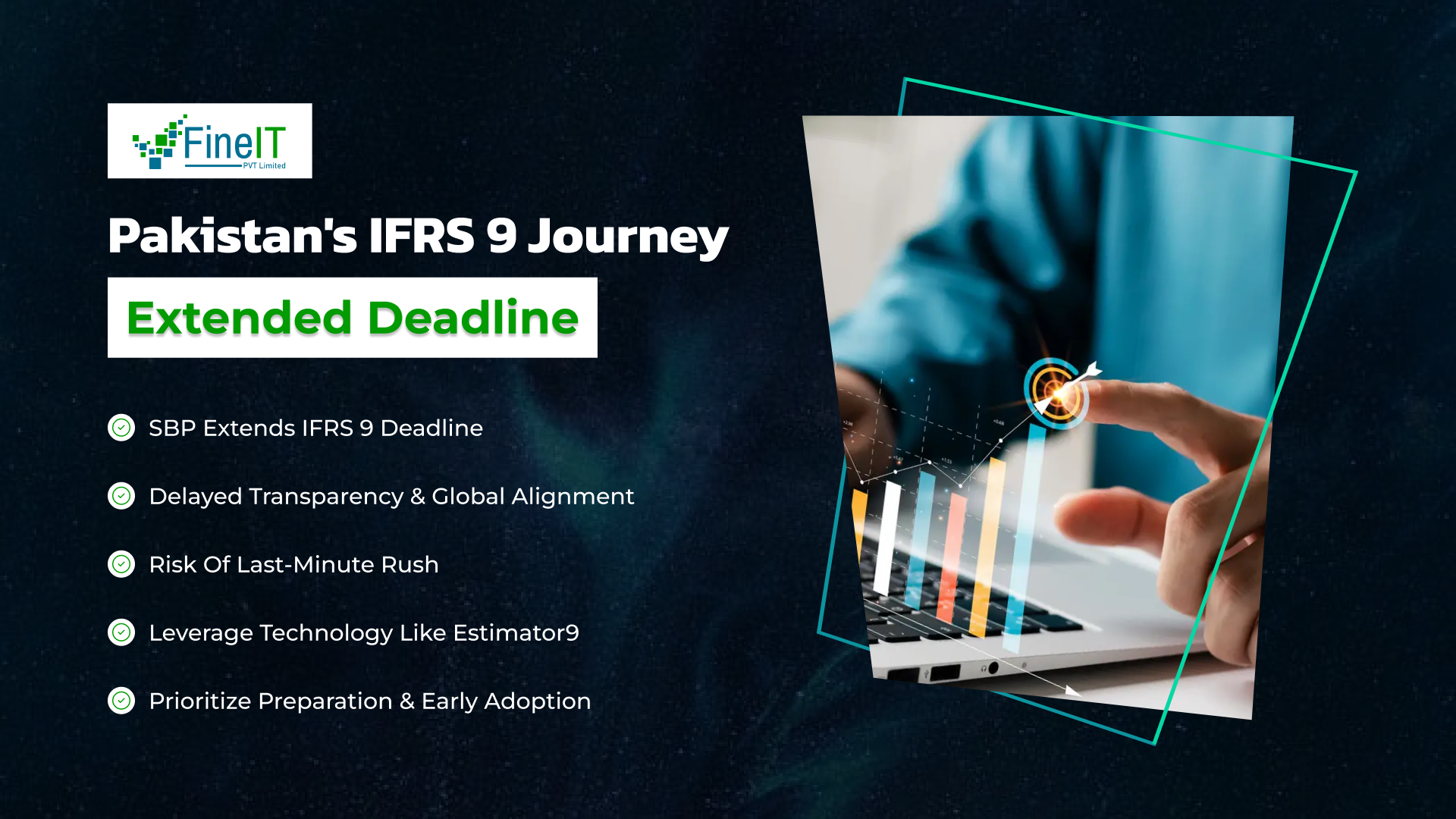
The State Bank of Pakistan’s (SBP) recent decision to extend the implementation deadline for International Financial Reporting Standard (IFRS 9) has drawn mixed reactions from the financial sector. While the extension provides temporary relief to banks and financial institutions (FIs), it raises questions about the long-term implications for financial reporting transparency and consistency in Pakistan.
What happened in Pakistan’s IFRS 9 implementation timeline?
Originally, IFRS 9 implementation was set for January 1st, 2022, for large banks (those with asset size exceeding Rs. 500 billion) and Development Finance Institutions (DFIs). However, in July 2022, the SBP announced a delay, pushing the deadline back to January 1st, 2023. This latest extension applies to these larger institutions as well as all other banks and Microfinance Banks (MFBs). Notably, early adoption of the standard remains permissible.
What criticisms have been raised about the implementation delays?
While the rationale behind the extension might involve addressing industry feedback and allowing for a smoother transition, there are potential drawbacks to consider:
- Delayed Transparency: IFRS 9 aims for a more robust and risk-sensitive approach to financial instrument accounting. A delay in implementation can postpone the benefits of increased transparency and comparability in financial reporting across Pakistani institutions.
- Global Alignment Concerns: Pakistan’s financial sector aspires for greater integration with international markets. Delays in adopting globally recognized standards like IFRS 9 can create a disconnect and potentially hinder this integration.
- Implementation Challenges Pushed Back: The extension might lead to a sense of complacency among some institutions, potentially delaying their preparations for adopting the new standard. This could lead to a last-minute scramble when the final deadline arrives.
How can technology be leveraged for efficient IFRS 9 implementation?
Amidst the extended timeline, financial institutions can benefit from utilizing technology to streamline IFRS 9 implementation. Solutions like IFRS 9, a fully automated IFRS 9 compliance software, can significantly reduce the burden of calculating Expected Credit Loss (ECL). With a proven track record of satisfying clients across various regions, Estimator9 offers a reliable and efficient approach to meeting IFRS 9 requirements.
What does the future hold for Pakistan’s IFRS 9 implementation?
The SBP’s decision to extend the IFRS 9 implementation timeline offers breathing room for Pakistani banks and FIs. However, it’s crucial to utilize this time effectively. Institutions should prioritize completing the necessary preparations, including staff training, system upgrades, and data migration. Furthermore, early adopters should ensure their reporting practices are aligned with the standard’s requirements. By leveraging technology and adopting a proactive approach, the Pakistani financial sector can mitigate the challenges posed by the delayed implementation and position itself for a successful transition to IFRS 9.
Frequently Asked Questions
About FineIT Private Limited
FineIT Private Limited is a leading Fintech provider.
Published by
Muzammal Rahim
FineIT Private Limited — IFRS and Basel compliance software, incorporated in Islamabad, Pakistan, in April 2022,