IFRS 9 Implementation Guidelines by Bank of Tanzania
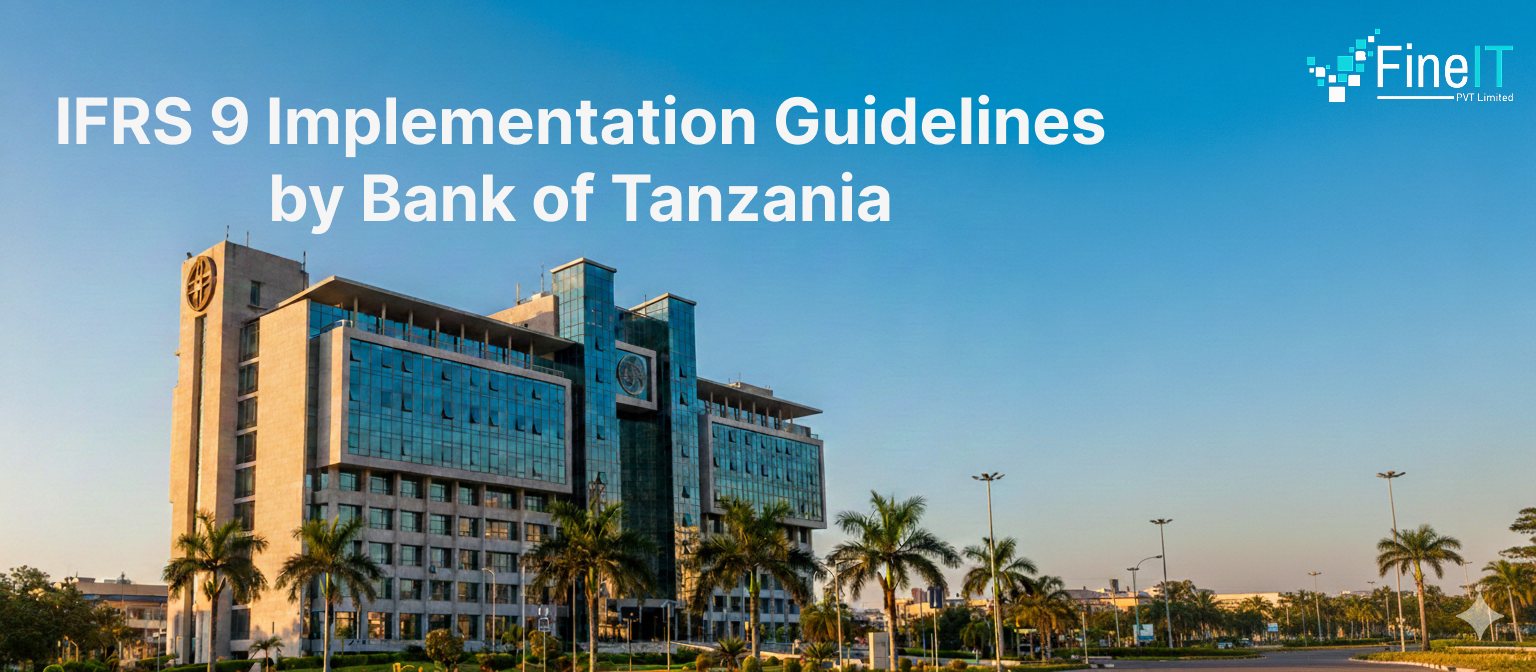
The adoption of International Financial Reporting Standards (IFRS) in Tanzania in July 2004 marked a significant milestone in improving financial reporting, transparency, and comparability across reporting entities. A major evolution within this framework came with the issuance of IFRS 9 – Financial Instruments by the International Accounting Standards Board (IASB) in July 2014, replacing IAS 39. The new standard became effective on 1 January 2018, introducing a forward-looking Expected Credit Loss (ECL) model.
Recognizing the profound impact of IFRS 9 on capital adequacy, provisioning, and credit risk management, the Bank of Tanzania (BoT) issued detailed implementation guidelines to ensure high-quality, consistent, and prudent application of the standard across the banking sector. These guidelines aim to enhance reliability in capital measurement, strengthen market discipline, and promote financial stability.
1. What is the What is the regulatory objective of the Bank of Tanzania??
The Bank of Tanzania, as the integrated regulator and supervisor of banks and financial institutions, is committed to:
- Ensuring robust and consistent implementation of IFRS 9
- Promoting comparability across institutions
- Safeguarding capital adequacy
- Enhancing transparency and investor confidence
While the BoT guidance does not override IFRS 9, it supplements the standard by addressing supervisory concerns and aligning implementation with Basel Committee guidance, particularly:
- Guidance on Credit Risk and Accounting for Expected Credit Losses (2015)
- Regulatory Treatment of Accounting Provisions – Interim Approach and Transitional Arrangements (2017)
2. What are the What are the core areas of IFRS 9 implementation guidance??
2.1 How is a significant increase in credit risk (SICR) assessed?
Under IFRS 9, financial assets measured at amortized cost or FVOCI must be assessed at each reporting date to determine whether credit risk has increased significantly since initial recognition.
BoT requires banks to:
- Establish strong governance frameworks and credit risk monitoring systems
- Use quantitative indicators (change in lifetime Probability of Default – PD)
- Consider qualitative indicators, including:
- Credit bureau scoring deterioration
- Collateral value decline
- Expected restructuring due to financial distress
- Unlikeliness to pay
- Sectoral and macroeconomic risks
The commonly used 30-days past due presumption may be rebutted, but not beyond 60 days, and only with strong supporting analysis.
2.2 How does How do staging and credit migration work? work?
IFRS 9 introduces a three-stage impairment model:
Stage 1
12-month ECL (no significant increase in credit risk)
Stage 2
Lifetime ECL (significant increase in credit risk)
Stage 3
Credit-impaired assets
BoT provides clear migration criteria:
What are the requirements for upgrading from Stage 3 to Stage 2?:
- Overdrafts: Satisfactory performance for two consecutive quarters
- Term loans: Four consecutive timely repayments
What are the requirements for upgrading from What are the requirements for upgrading from Stage 2 to Stage 1??:
- All payments up to date
- Improvement in risk indicators
- Monitoring period:
- 90 days for conventional loans
- 30 days for microfinance loans
This ensures disciplined and objective staging practices.
3. What are the What are the Expected Credit Loss (ECL) model requirements??
3.1 What are the requirements for What are the requirements for model governance and design??
Banks must develop sound ECL models appropriate to their:
- Size
- Complexity
- Risk profile
ECL must be computed for:
- Loans and advances
- Financial guarantees
- Loan commitments
- Lease receivables
Quarterly updates of ECL are mandatory, and model methodologies must be reviewed at least annually.
3.2 What are the What are the key components of ECL??
(a) Probability of Default (PD)
- Must reflect historical (5–10 years), current, and forward-looking data
- Incorporate macroeconomic variables such as interest rates, unemployment, and commodity prices
- Constant marginal default rates are prohibited without justification
(b) Loss Given Default (LGD)
- Should reflect:
- Forward-looking collateral valuation
- Haircuts for forced sales
- Time to recovery
- Costs of realization
- Present value techniques must be applied
(c) Exposure at Default (EAD)
- Exposure period must align with contractual risk exposure
- Revolving facilities require behavioral analysis
- Lifetime EAD cannot be approximated using 12-month EAD without justification
(d) Discount Rate
- Must approximate the Effective Interest Rate (EIR)
- Reflect time value of money
4. How is default defined?
BoT defines default as:
- More than 90 days past due (banks)
- More than 30 days past due (microfinance institutions)
- Or qualitative “unlikeliness to pay” events
This aligns accounting treatment with regulatory credit risk standards.
5. What are the requirements for What are the requirements for model validation and documentation??
Banks must establish independent validation processes covering:
- Assumptions
- Model design
- Data inputs
- Outputs and performance thresholds
Validation must be:
- Independent of model development
- Documented
- Reviewed by auditors
- Reported to senior management and the Board
Comprehensive documentation of methodologies and updates is mandatory.
6. What are the What are the transitional arrangements and capital impact considerations??
The shift from IAS 39 to IFRS 9 significantly increased impairment levels, potentially reducing capital.
To avoid “capital shock,” BoT introduced a transitional arrangement:
- If IFRS 9 impairment exceeds BoT regulatory provisions at first-time adoption, the excess may be amortized over three years solely for Core Capital computation purposes
BoT continues to require:
- Comparison between IFRS impairment and regulatory provisions
- General provision of 1% for performing loans
This ensures a smooth capital transition while maintaining prudential discipline.
7. Strategic Impact on Tanzania’s Banking Sector
The effective implementation of IFRS 9 has broader implications:
- Strengthens credit risk management frameworks
- Enhances transparency and disclosure
- Improves comparability with global banking systems
- Aligns Tanzania with Basel and international supervisory standards
- Supports investor confidence
As Tanzania seeks to expand Foreign Direct Investment (FDI) beyond mining into services, agriculture, and manufacturing, strong banking standards are a critical enabler. International investors favor jurisdictions with predictable, transparent, and globally aligned financial systems.
8. What are the What are the implementation challenges??
Despite progress, key challenges remain:
- Insufficient historical data
- Weak IT infrastructure
- Limited quantitative expertise
- High cost of model development
- Need for cross-departmental integration
Addressing these challenges requires investment in technology, data warehousing, and human capital.
9. What are the key takeaways?
The IFRS 9 Implementation Guidelines issued by the Bank of Tanzania represent more than regulatory compliance—they signify a structural reform in credit risk measurement and financial reporting.
By enforcing rigorous ECL modeling, strict staging criteria, independent validation, and transitional capital arrangements, the Bank of Tanzania has reinforced the integrity of the financial system.
Effective implementation of IFRS 9 is intended to enhance:
- Financial stability
- Market discipline
- Investor confidence
- Tanzania’s credibility in the global financial community.
Navigating IFRS 9 compliance requires expertise, robust systems, and regulatory alignment.
FineIT provides end-to-end IFRS 9 implementation services in Tanzania, including ECL model development, validation, data infrastructure design, regulatory reporting, and ongoing support.
Partner with FineIT to strengthen your credit risk management, ensure compliance, and enhance operational resilience in line with Bank of Tanzania guidelines.
Frequently Asked Questions
About FineIT Private Limited
FineIT Private Limited is a leading Fintech provider.
Published by
Muzammal Rahim
FineIT Private Limited — IFRS and Basel compliance software, incorporated in Islamabad, Pakistan, in April 2022,