Data Gaps in Bangladeshi Financial Institutions
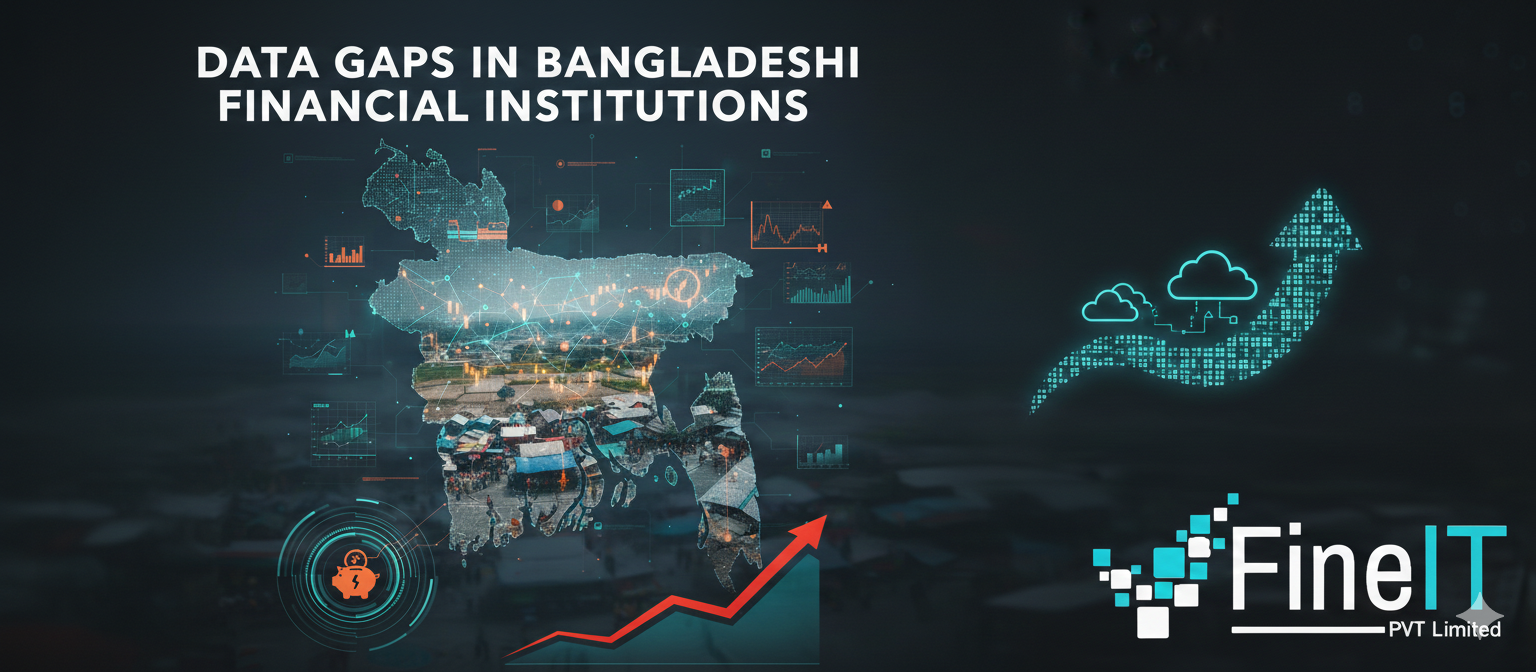
As Bangladesh navigates its transition toward “Smart Bangladesh 2041” and prepares for its 2026 graduation from Least Developed Country (LDC) status, its financial sector is facing a moment of reckoning. While digital banking and Mobile Financial Services (MFS) have seen explosive growth, a deeper structural issue remains: significant data gaps.
These gaps defined by missing, inaccurate, or siloed information—are no longer just administrative hurdles; they are systemic risks that threaten macroeconomic stability.
1. The Reality of the “Hidden” NPLs
Perhaps the most visible consequence of data gaps is the disparity in Non-Performing Loan (NPL) reporting. For years, relaxed classification rules and manual reporting allowed institutions to mask the true extent of bad debt.
What is driving What Caused the Surge??
As of early 2026, transparency reforms have revealed that NPLs in the banking sector reached a staggering 35.73% (approximately BDT 6.44 trillion).
What is What is the Gap??
Previously reported figures were often half this amount. This “data correction” has exposed a massive provision shortfall, leaving banks vulnerable to liquidity shocks.
2. How does information asymmetry affect credit markets?
Data gaps create a “trust deficit” between lenders and borrowers, particularly in the MSME (Micro, Small, and Medium Enterprise) sector.
What barriers do MSMEs face?
Without a unified, data-rich credit scoring system, small businesses struggle to prove creditworthiness. This has resulted in a financing gap estimated at over $38 billion.
How does How Does Rural Connectivity Impact Financial Institutions? impact financial institutions?
While urban centers are data-saturated, rural financial activity remains largely “offline” or trapped in manual ledgers, preventing inclusive policy-making.
3. What structural barriers prevent modernization?
The transition to data-driven banking is hampered by several internal factors:
How do How Do Legacy Systems Impede Progress? hinder progress?
Many state-owned and private banks operate on fragmented IT infrastructures where data is siloed by department, preventing real-time risk assessment.
Why is there a skills shortage?
There is a critical lack of data scientists and cybersecurity experts. Current estimates suggest a significant portion of the workforce lacks the “data literacy” required to manage modern Shariah-compliant or digital-only banking frameworks.
How does How Does Regulatory Complexity Create Challenges? create obstacles?
Until recently, the lack of a comprehensive Personal Data Protection Act made institutions hesitant to share data, fearing legal repercussions or security breaches.
What strategies can address the 2026 turning point for closure?
The interim government and Bangladesh Bank have launched several “data-first” initiatives to bridge these divides:
Why is Why is Unified Data Governance Critical? essential?
The establishment of a National Data Governance Authority to standardize how financial data is collected and exchanged.
What role do Asset Quality Reviews play?
Implementing rigorous, independent audits of bank balance sheets to ensure that the data reflected in annual reports matches reality.
How can How Can Digital Public Infrastructure Enable Change? help?
Strengthening platforms like Binimoy and the Interoperable Digital Payment Platform (IDPP) to ensure that transaction data flows seamlessly across the ecosystem.
What are the key takeaways?
Closing the data gaps is not merely a technical upgrade; it is a prerequisite for financial survival. For Bangladeshi financial institutions, the choice is clear: embrace transparency and data integrity now, or face a future of systemic instability.
FineIT delivers IFRS 9 advisory, ECL modeling, and data governance solutions tailored for Bangladesh’s evolving regulatory landscape. Let’s close the data gap—before it closes your growth opportunities.
Frequently Asked Questions
About FineIT Private Limited
FineIT Private Limited is a leading Fintech provider.
Published by
Muzammal Rahim
FineIT Private Limited — IFRS and Basel compliance software, incorporated in Islamabad, Pakistan, in April 2022,