Considering the Green: How ESG is Shaping Loan Risk Assessments
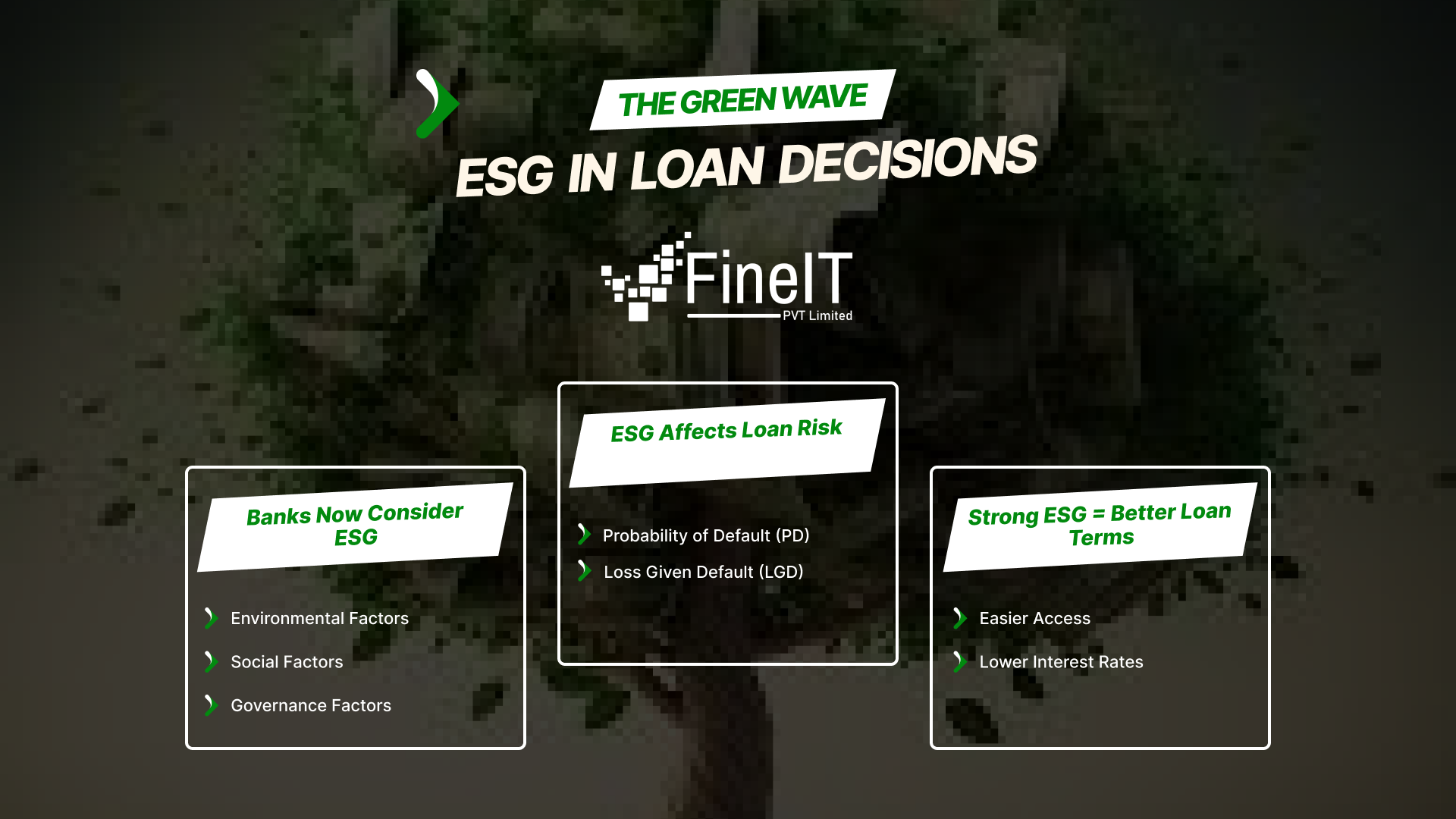
The financial world is undergoing a significant shift, with environmental, social, and governance (ESG) factors playing a growing role in decision-making. This trend extends to loan assessments, where traditional financial metrics are being complemented by a focus on a company’s ESG performance.
How Does IFRS 9 Address the ESG Challenge?
The International Financial Reporting Standard 9 (IFRS 9) sets the ground rules for how banks classify and account for loans. A key aspect of IFRS 9 is the Expected Credit Loss (ECL) calculation, which helps banks assess the potential risk of borrowers defaulting on loans.
Initially, IFRS 9 presented a challenge when it came to loans with ESG-linked features. The standard defines specific criteria for classifying financial assets based on their expected cash flow. However, loans tied to achieving ESG goals created some ambiguity.
What What clarifications and flexibility exist in ESG loan risk assessments? Does IFRS 9 Provide?
To address this challenge, the International Accounting Standards Board (IASB) issued amendments that provide more guidance and flexibility for classifying loans with ESG features under IFRS 9. Here’s the gist of the changes:
- Focus on Contractual Terms: The amendments emphasize that if the loan agreement stipulates solely principal and interest repayments, the ESG features wouldn’t necessarily affect the classification.
- Nuanced Approach: The amendments allow for a more detailed assessment based on the specific terms of the loan. Significant ESG-linked features that could impact cash flows would still require classification outside the standard category.
What Is the Impact of ESG on ECL Calculations?
While the calculation methodology in IFRS 9 remains unchanged, the focus on ESG factors influences the inputs used for ECL calculations:
- Probability of Default (PD): ESG factors can affect a borrower’s likelihood of default. For example, a company with poor environmental practices might face stricter regulations, impacting their ability to repay. Banks should consider these ESG risks when estimating PD.
- Loss Given Default (LGD): ESG factors can also influence the severity of losses if a default occurs. For instance, a company with a strong social responsibility focus might be able to recover assets more easily after a default due to a better public image. This could potentially affect LGD calculations.
What Does What lies ahead for ESG in loan risk assessments? Look Like for ESG in Loan Risk Assessment?
The integration of ESG factors into loan risk assessments is still evolving. Standardized data on ESG performance is needed to accurately quantify the impact on ECL. However, banks are actively developing their own approaches to consider ESG alongside traditional financial metrics.
The takeaway? Companies with strong ESG performance may see benefits in terms of loan access and potentially lower interest rates. Conversely, companies with poor ESG practices might face higher borrowing costs or even difficulties securing loans. As more emphasis is placed on ESG, businesses that prioritize sustainability and responsible practices will likely be viewed more favorably by lenders.
How Can You How can you unleash the power of ESG in loan risk assessments??
IFRS 9, a comprehensive IFRS 9 software solution from FineIT, empowers you to seamlessly factor in ESG considerations within your credit risk assessments. Our software automates complex calculations, ensures compliance with IFRS 9 standards, and provides expert support to help you navigate the dynamic landscape of ESG integration.
Focus on growth, not compliance headaches. Schedule a free demo of IFRS 9 today and see how we can empower your financial management with confidence.
Frequently Asked Questions
About FineIT Private Limited
FineIT Private Limited is a leading Fintech provider.
Published by
Muzammal Rahim
FineIT Private Limited — IFRS and Basel compliance software, incorporated in Islamabad, Pakistan, in April 2022,